

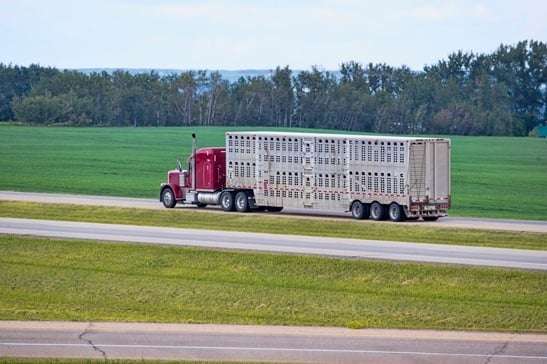
Livestock hauling is not “just another freight lane.” You’re transporting living animals with welfare needs, biosecurity considerations, and a narrow margin for error in weather, timing, and handling. A single incident can create multiple losses at once: injured animals, driver injury, equipment damage, customer disruption, and reputational harm.
The most effective approach is for livestock haulers to think in three exposure buckets:
-
Animal welfare and load-condition risk
-
Driver and handling risk at the facility interface
-
Documentation and regulatory risks that drive disputes and claim outcomes
animal welfare and load-conditon risk
Two of the biggest severity drivers in livestock transport are temperature and ventilation. Heat stress can escalate quickly during stops, traffic, and high humidity. Cold stress and wind chill can also create losses when animals are exposed. Practical guidance from land-grant extension and industry welfare resources consistently emphasizes transporting during cooler hours when possible, avoiding overstocking, and parking in shade when stops are unavoidable. The USDA National Agricultural Library also maintains a consolidated set of species-specific transport resources and regulations.
Stocking density and fitness-to-load decisions offer another major exposure for livestock haulers. Overcrowding often leads to bruising, down animals, and mortality risk. Meanwhile, underloading can increase slip/fall events during braking and cornering.
For cattle, the Beef Quality Assurance publication offered by the National Cattleman’s Beef Association offers detailed transportation guidance and loading-density considerations that directly impact welfare and shrink. For hogs, Transport Quality Assurance (TQA) provides best practices on loading, ventilation, and handling that can reduce injury and stress.
Facility interface and driver safety
Many livestock losses happen when the truck is not moving. Loading and unloading create animal movement risks, including bunching, backing up, and balking. Additionally, drivers can be exposed to risks ranging from gates and ramps to kick/strike injuries from unruly animals.
Wet floors, manure, ice, and uneven surfaces increase slip-and-fall incidents, especially when haulers are rushed to meet appointment windows. The safest carriers standardize a “site walk” routine for every load, including checking ramps, latch points, gate swing zones, and footings before opening compartments.
There is also a property-damage component at facilities, ranging from broken gates to damaged chutes, as well as trailer damage from tight turns and poor dock design. All of these factors could create disputes about who caused what. Clean documentation helps. Haulers should take photos of their trailer condition at arrival and departure, note facility conditions, and report any incident immediately so the story is clear before memories fade.
where small problems become big claims
Biosecurity is unique to livestock. Cross-contamination can trigger claims and customer fallout, especially in the wake of an improper washout. Livestock haulers should standardize and document washout and clean-out steps. It is true that not all livestock hauling operations have the same biosecurity rules, but disciplined records absolutely cut dispute risk.
In this industry, many disputes hinge on paperwork and timing. Paying close attention to weight tickets, bills of lading, fitness notes, and timestamps can be significant in determining if a loss is the fault of the hauler, facility, or was pre-existing. Consistent records of counts by compartment, ventilation, stops, and exceptions make claims easier to resolve.
the name you can trust
At Joe Morten & Son, Inc., we work with trucking operations to protect their bottom line. If you’re in the market for an agency that puts you first, we’re here to help.
Note: These lists are not intended to be all-inclusive.

We offer commercial trucking coverage in more than 45 states. Check out more information in your state:
Alabama, Arizona, Arkansas, Colorado, Connecticut, Delaware, Florida, Georgia, Idaho, Illinois, Indiana, Iowa, Kansas, Kentucky, Louisiana, Maine, Maryland, Michigan, Minnesota, Mississippi, Missouri, Montana, Nebraska, Nevada, New Hampshire, New Jersey, New Mexico, North Carolina, North Dakota, Ohio, Oklahoma, Oregon, Pennsylvania, Rhode Island, South Carolina, South Dakota, Tennessee, Texas, Utah, Vermont,
Virginia, Washington, West Virginia, Wisconsin, and Wyoming.
Insurance contracts are underwritten, administered, and issued by Great West Casualty Company, Old Republic Life Insurance Company, and Old Republic Union Insurance Company. One or more Old Republic companies may provide the products and/or services described. Information presented is for illustrative purposes only and does not constitute a contract or advice, including employment advice or advice to motor carriers. Please refer to the relevant insurance policy for actual terms. Products and services may not be available in all states and may be subject to change without notice. © 2026 Old Republic International Corporation. Old Republic® and the Old Republic Circle of Stars monogram are registered trademarks. All Rights Reserved.