

Improper cargo securement is a compliance issue that can create serious safety risks on the road. A single unsecured load can lead to cargo loss, vehicle damage or accidents that affect drivers and other motorists. For owner-operators and small fleets, proper securement is one of the most effective ways to reduce risk and maintain trust with customers and insurers alike.
Why Cargo Securement Matters More Than Ever
Cargo securement can directly influence safety and insurance exposure. Shifting or falling cargo can contribute to rollovers, jackknifes and roadway hazards. Improper securement remains one of the most frequent violations found during roadside inspections, and repeated citations can negatively affect compliance, safety, and accountability (CSA) scores and insurance renewals.
Cargo-related losses may also lead to increased claims activity and higher premiums in future policy periods. Consistent, well-documented securement practices can help demonstrate operational discipline and can strengthen a fleet’s overall risk profile.
Understanding FMCSA Cargo Securement Requirements
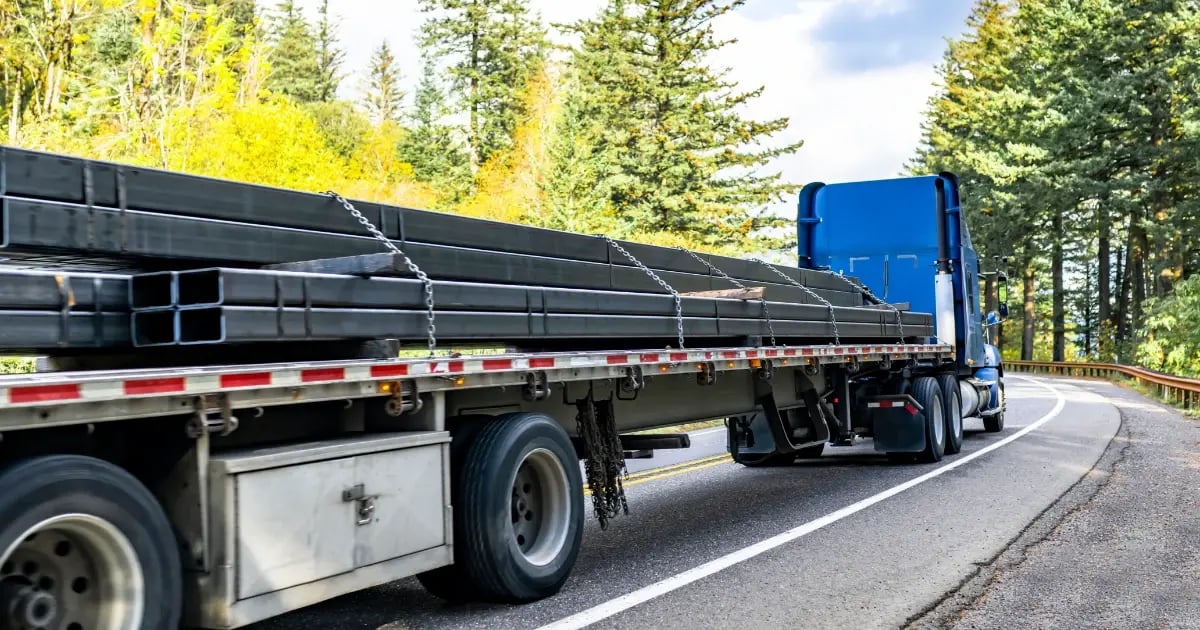
Compliance begins with understanding and applying FMCSA cargo securement regulations. Federal rules require all cargo to be firmly immobilized and secured to prevent movement in any direction. Securement standards vary based on freight type, such as general freight, logs, machinery or metal coils, and the number of tie-downs required depends on the load’s length and weight.
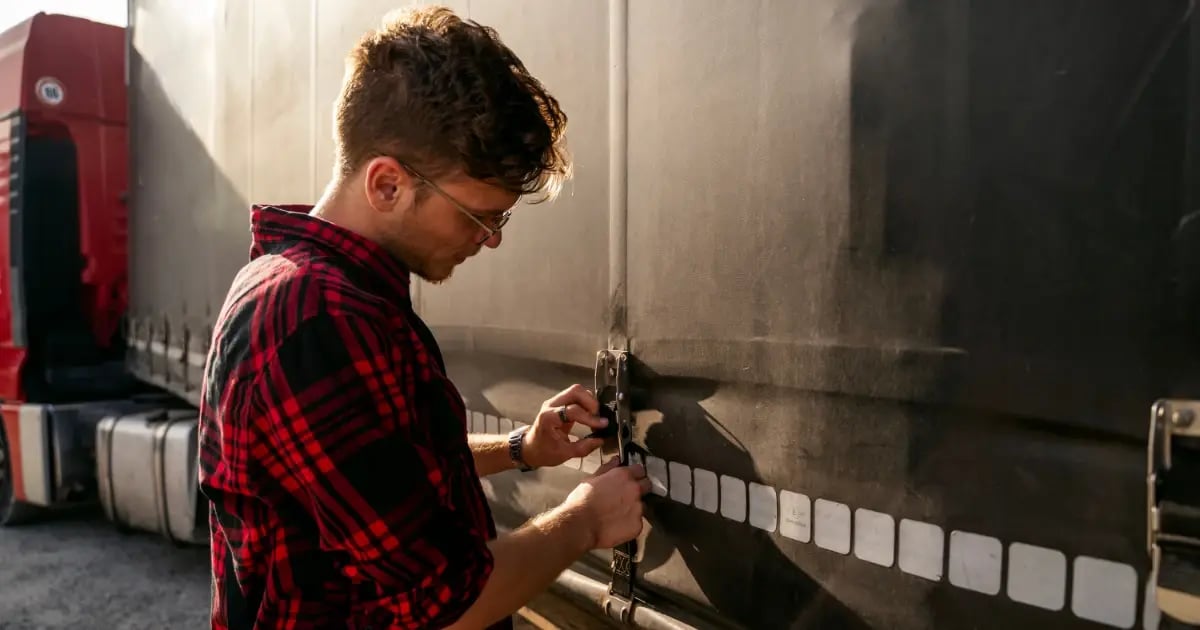
Securement devices must be properly rated and maintained in good working condition. Regular inspections can help identify worn straps, damaged chains, or weakened anchor points before they lead to a compliance issue or load failure.
Common Cargo Securement Mistakes to Avoid
Many securement issues occur not from negligence but from small oversights that accumulate over time. Using worn or incorrectly rated straps, failing to recheck securement after the first 50 miles, or assuming previous methods will always work can all contribute to incidents. Load distribution also plays a critical role; improper balance can lead to uneven weight distribution and handling issues.
Taking time to verify each element of the securement process helps reduce these common errors.
Best Practices for Proper Load Securement
Strong securement habits can improve both safety and compliance performance. Match the securement method to the load by using chains for heavy equipment, straps with edge protectors for general freight, or dunnage for specialized cargo. Follow FMCSA minimum tie-down requirements and document securement checks when possible.
Environmental conditions such as rain or snow may require additional precautions. Adjusting securement based on these factors can help ensure the load remains stable throughout the trip.
The Takeaway
Cargo securement is a fundamental part of safe, professional trucking. By understanding the regulations and building consistent habits, drivers and fleet operators can protect their cargo and reputations on the road.
To learn more about how risk management and safety programs can support secure, compliant operations, request a free consultation from Joe Morten & Son, Inc.

We offer commercial trucking coverage in more than 45 states. Check out more information in your state:
Alabama, Arizona, Arkansas, Colorado, Connecticut, Delaware, Florida, Georgia, Idaho, Illinois, Indiana, Iowa, Kansas, Kentucky, Louisiana, Maine, Maryland, Michigan, Minnesota, Mississippi, Missouri, Montana, Nebraska, Nevada, New Hampshire, New Jersey, New Mexico, North Carolina, North Dakota, Ohio, Oklahoma, Oregon, Pennsylvania, Rhode Island, South Carolina, South Dakota, Tennessee, Texas, Utah, Vermont,
Virginia, Washington, West Virginia, Wisconsin, and Wyoming.
This material is intended to be a broad overview of the subject matter and is provided for informational purposes only. Joe Morten & Son, Inc. does not provide legal advice to its insureds or other parties, nor does it advise insureds or other parties on employment-related issues, therefore the subject matter is not intended to serve as legal or employment advice for any issue(s) that may arise in the operations of its insureds or other parties. Legal advice should always be sought from legal counsel. Joe Morten & Son, Inc. shall have neither liability nor responsibility to any person or entity with respect to any loss, action, or inaction alleged to be caused directly or indirectly as a result of the information contained herein. Reprinted with permission from Great West Casualty Company.